Clean Energy Where It's Needed Most
Legacy and emerging humanitarian deployments of MicroPower thermoelectric generators – clean cooking, off-grid power, and disaster response.
The Global Energy Access Challenge
Clean cooking and electricity access in developing regions
Context
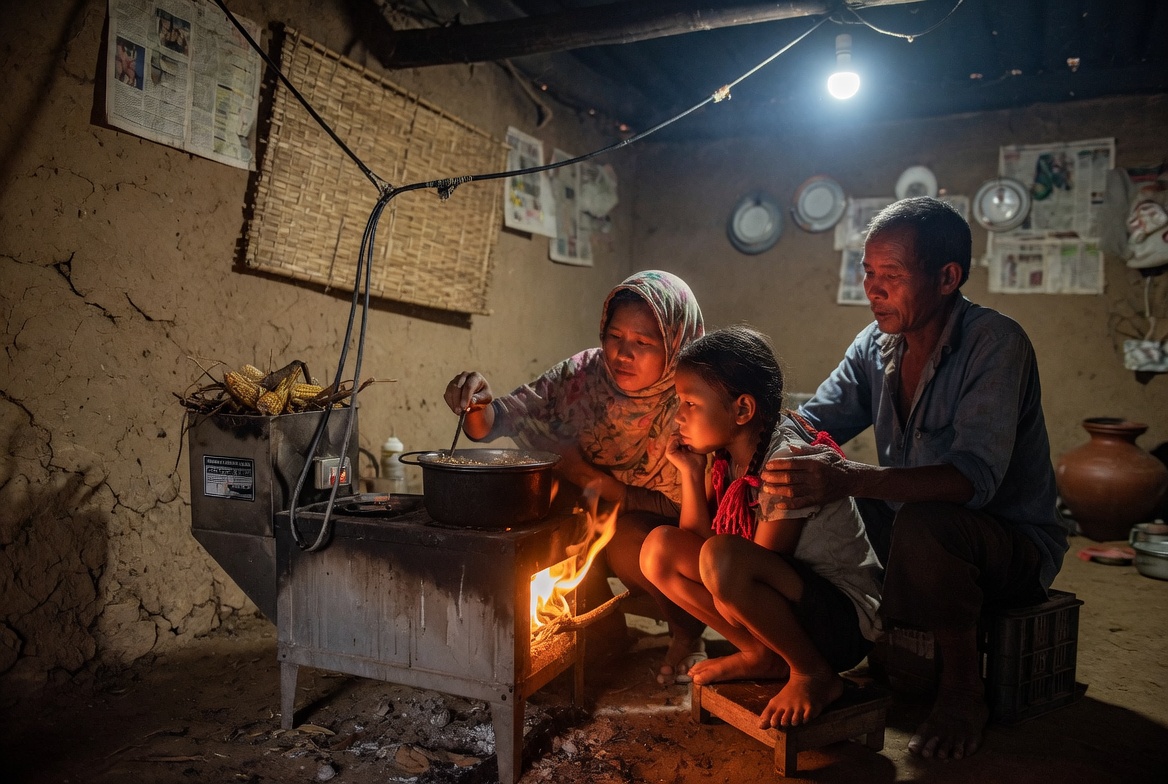
A substantial share of the global population still cooks on open fires or basic biomass stoves, and many of the same communities lack reliable grid electricity. Indoor air pollution from cooking remains a major contributor to global mortality, falling disproportionately on women and children. (Headline population estimates vary across IEA, WHO and Clean Cooking Alliance sources; we omit specific figures here rather than fix them at a single contested number.)
Why Clean Cooking Matters
Modern clean cooking technology improves health and reduces environmental damage. Many clean cooking stoves still need electricity for accessories such as lighting, ventilation, or water heating, which off-grid communities cannot easily provide.
Where MicroPower Has Fit Historically
A clean cooking stove with integrated thermoelectric generators becomes a self-powered system: the stove itself supplies the small electrical loads. MicroPower's historical work in this space (Xtralec / ESSE installation, Enerkit 2013 MoU) demonstrated the integration pattern; this is not a currently funded commercial product line for MicroPower.
Real-World Field Installation: Xtralec System
50W thermoelectric system on ESSE biomass cooking stove
The Installation
A 50W thermoelectric power generation system was integrated with an ESSE biomass cooking stove in a field installation:
System Specifications
- Stove type: ESSE biomass cooker (wood/agricultural waste fuel)
- Hot plate temperature: 450°C
- Temperature differential (ΔT): 250-300°C across TEG module
- Continuous power output: 50W
What 50W Powers
- LED wall lighting: Full-brightness illumination for room
- USB charging: Phone/device charging during cooking
- Small fan: Ventilation or air circulation
- Water heating: Small water heating applications
Impact
A family using the stove for several hours daily generates electricity during every meal preparation. No external fuel required beyond normal cooking, and minimal operational complexity for the conversion module itself.
Legacy Reference
The Xtralec / ESSE installation stands as a real, field-demonstrated example of the integration pattern – a deployed thermoelectric power layer on a biomass stove that worked as designed. We are not currently quoting addressable-market scale-out figures for this configuration; the value of the artefact is the demonstration record, not a near-term commercial forecast.
Enerkit Partnership & Integration
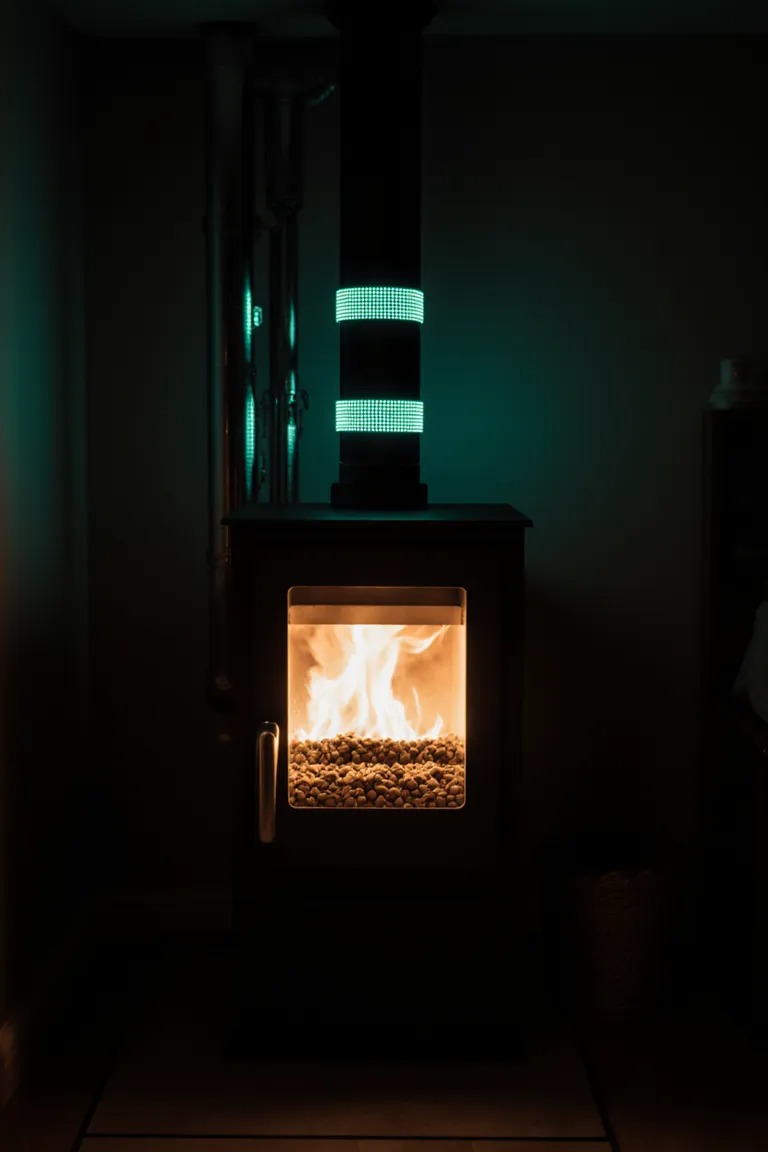
Commercial clean cooking stove with integrated thermoelectric generation
Enerkit Clean Cooking Platform
Enerkit, a leading clean cooking technology company, signed a Memorandum of Understanding (MoU) with MicroPower in 2013 to integrate thermoelectric generators into commercial clean cooking stove products.
Product Vision
Integrated clean cooking stove with:
- Efficient biomass combustion (wood/agricultural waste)
- Thermoelectric power generation on flue gas
- Direct LED lighting (50-100W equivalent)
- Battery charging capability
- Water heating accessory
Geographic Relevance
Clean cooking demand is concentrated across Sub-Saharan Africa, South Asia and Southeast Asia. Specific population and addressable-market figures vary substantially across IEA, WHO and Clean Cooking Alliance sources; we omit a single contested number here.
Disaster Relief & Emergency Response
Portable power from any heat source in crisis situations
Portable Thermoelectric Power Systems
Natural disasters (earthquakes, floods, hurricanes) often eliminate grid electricity for weeks or months. Communities in crisis need power for:
- Medical equipment (ventilators, dialysis machines, refrigeration for vaccines)
- Communication (phone charging, emergency radios)
- Water purification (portable purification systems require electricity)
- Lighting (LED lamps)
MicroPower Solution Pattern
Portable thermoelectric generator systems require only a heat source:
- Communities have cooking fires (necessary for survival)
- Place a thermoelectric module on the cooking heat source
- Generate tens to low-hundreds of watts of continuous electricity
- No fuel logistics for the recovered power beyond the cooking fuel already required
- The solid-state conversion module has no moving parts to wear or fail mechanically
Why this pattern suits crisis conditions
- Minimal supply logistics: works with whatever cooking fuel is available locally
- Robust: solid-state conversion module is mechanically simple
- Quick deployment: low setup complexity
- Low capital cost: modest investment per unit for essential loads
Historical relevance
In past disaster responses (2015 Nepal, 2016 Ecuador, 2023 Syria), affected communities have needed emergency power. The pattern above is the kind of self-contained capability MicroPower's hardware can support; large-scale humanitarian deployment is not a current MicroPower commercial workstream.
Remote Telecom Infrastructure
Powering cell towers in off-grid regions
The Challenge
Cell towers in remote regions (Sub-Saharan Africa, rural Asia, South America) lack grid connection. They depend on diesel generators, requiring expensive fuel transport to isolated locations.
Waste Heat Asset
Diesel generators that power towers generate 40-60% waste heat. Thermoelectric recovery harvests 10-30% additional output from that waste.
Economic Impact
Additional recovered power reduces diesel consumption, decreasing fuel delivery costs in expensive remote locations while improving telecom infrastructure reliability.
Implementation Example
Scenario: Remote cell tower in rural Africa powered by 10kW diesel generator, running 20 hours/day.
- Generator waste heat: 12-14 kW continuous
- MicroPower recovery: 1.5-2 kW (14% efficiency)
- Annual fuel saved: ~3,000 liters diesel
- Annual cost savings: ~$2,250 at $0.75/liter remote pricing
- System payback: 3-4 years on $10-15K capital investment
Additional benefit: Reduced fuel transport logistical burden in remote regions improves tower reliability and reduces operational complexity.
Healthcare & Education In Remote Regions
Reliable power for essential services
Healthcare Clinics
Rural healthcare clinics in developing regions need reliable electricity for:
- Refrigeration: Vaccine storage at 2-8°C
- Lighting: Surgical/clinical examination lighting
- Diagnostics: EKG, ultrasound, blood analysis equipment
- Communication: Telemedicine connectivity
MicroPower integrated with clinic generators ensures consistent power without fuel supply interruptions.
School & Educational Centers
Remote schools need power for:
- Computer labs: Educational technology access
- Lighting: Evening study programs
- Communication: Internet connectivity for remote learning
- Safety: Outdoor lighting for secure campus
TEG integration with existing school generators maximizes educational infrastructure effectiveness.