Precision Solid-State Cooling
The Seebeck effect reversed. MicroPower's materials work in power generation positions the company to pursue precision cooling – with zero vibration and zero refrigerants. An emerging, partner-led opportunity, not a current commercial product line.
Status note. Cooling mode is an emerging, partner-led opportunity – not MicroPower's current validated commercial product line. Power generation is the validated, field-deployed line of the business. For the most disciplined framing of the cooling pathway, see the Bioenergetics & Synbio page.
The Peltier Effect
A thermoelectric device is reversible. Apply a temperature difference, it generates electricity (Seebeck Effect). Apply electrical current, one side gets cold and the other gets hot (Peltier Effect).
MicroPower's platform, whose modules deliver 14% power-generation efficiency at 550°C, uses the same underlying material science that could be deployed in reverse – as a precision cooling system. The same chip platform – and, in the post-funding production roadmap, the same energy-sorting barrier architecture – is expected to deliver advantages in cooling applications as well.
When electrical current is driven through a MicroPower BiTe cooling module, the junction would act as a heat pump. One side would absorb thermal energy from the target system (a bioreactor, a laboratory chamber, a sample storage system). The other side would reject that heat to ambient or to a secondary cooling loop.
Potential: Because the device is reversible, MicroPower's materials could in principle be run in cooling (Peltier) mode. No cooling-performance figure has been demonstrated, benchmarked, or validated, and there is no MicroPower cooling product today – this is a forward, partner-led research direction rather than a measured capability.
The Opportunity Ahead
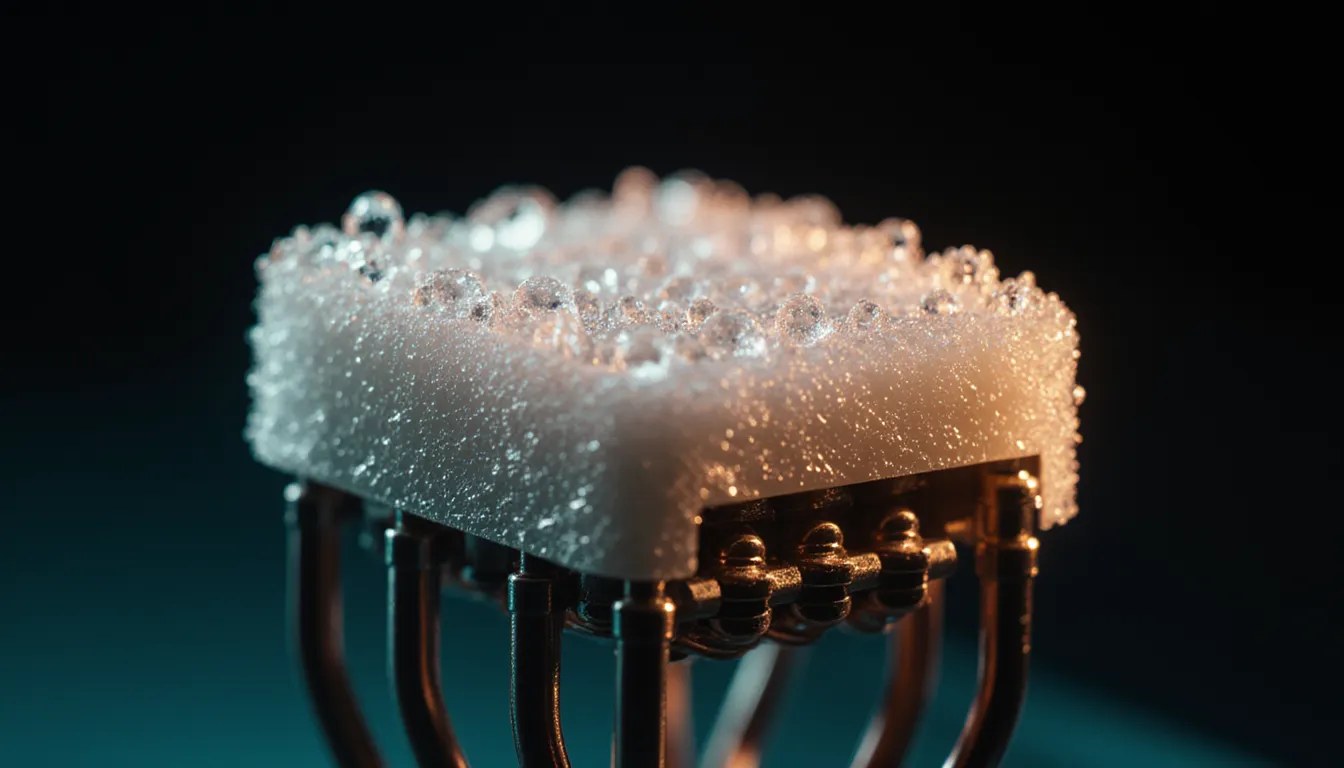
MicroPower's thermoelectric cooling represents a significant untapped opportunity. The company has validated 14% conversion efficiency and 11 W/cm² power density in power generation mode across multiple real-world deployments: steel mills, biomass facilities, biogas plants, and more.
The same chip platform – PbTe/TAGS materials with the high-temperature contact and thermal-interface structures informed by MicroPower's early collaboration with the U.S. Army Research Laboratory and substantially evolved internally since – is theoretically expected to deliver comparable advantages when deployed in reverse (cooling mode). However, commercial cooling applications have not yet been tested or validated in field conditions.
Status: Cooling mode is an emerging market opportunity. MicroPower is positioned to pursue commercial validation and market entry once engineering and commercial partnerships align.
Why Solid-State Beats Mechanical
The core advantages of thermoelectric cooling
Zero Vibration
No moving parts. No compressors, no pumps. Solid-state electron flow produces zero mechanical vibration.
Critical for sensitive bioprocessing and laboratory work where vibration can ruin sample integrity or compromise measurements.
Zero Refrigerants
No HFCs, no CFCs, no environmental impact. Thermoelectric cooling is a passive phase-change-free technology.
Eliminates regulatory burden. No EPA certification needed. No leak risk. No disposal requirements.
Sub-Second Thermal Response
Apply power, temperature responds instantly. No lag. No thermal settling time.
Enables dynamic thermal control – set the exact temperature you need and maintain it with precision feedback.
Materially Lower Maintenance
No compressor oil changes, no belt replacement, no seasonal servicing in the conversion module itself.
Long projected service life consistent with the material's track record in space-application TEGs, supported by accelerated thermal-cycle testing.
Compact Form Factor
A single module can be integrated directly into existing equipment or mounted remotely with minimal footprint.
No need for large compressor units or extensive piping infrastructure.
Reversible Underlying Physics
The thermoelectric architecture itself is reversible: the same chip physics that drives the Seebeck (power) effect underpins the Peltier (cooling) effect.
Productised power-generation and precision-cooling systems use different materials (PbTe/TAGS vs. BiTe) and different packaging; few suppliers credibly span both with the same materials platform.
Cryogenic Capability
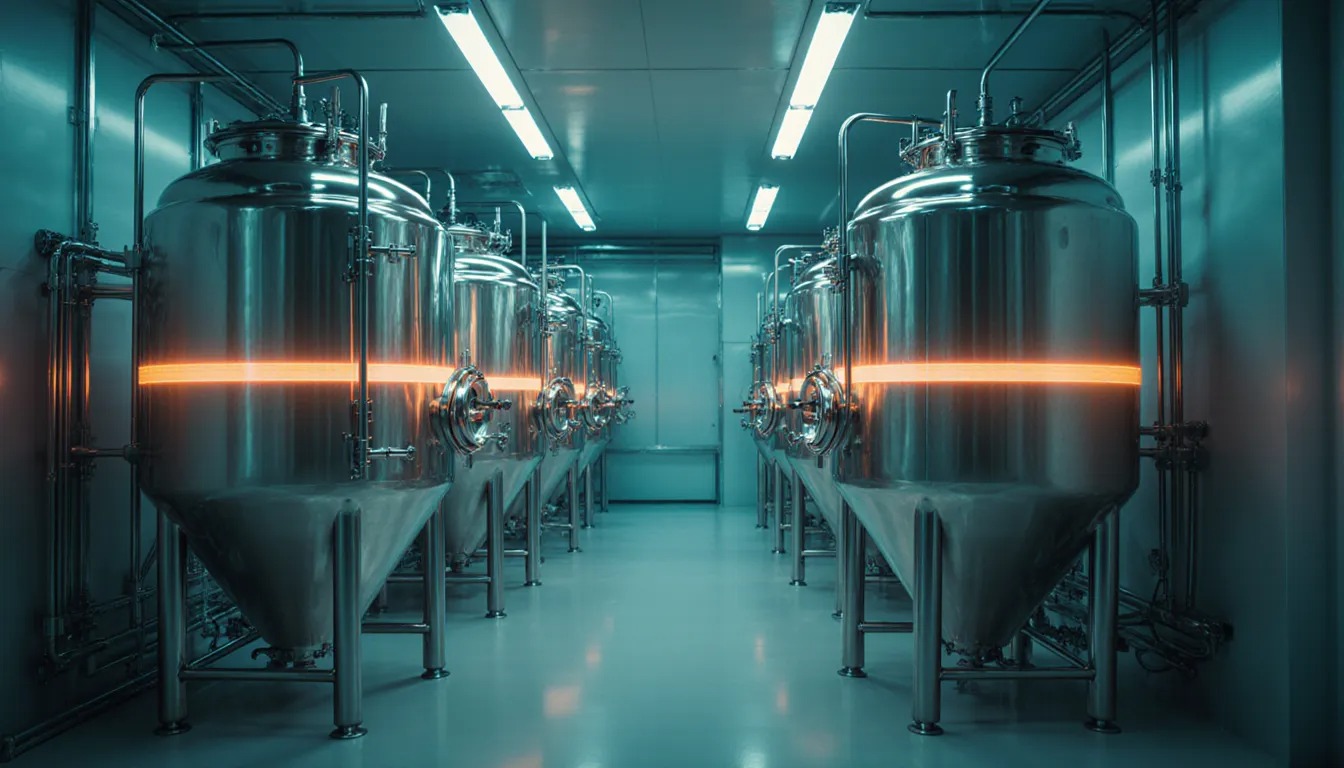
Thermoelectric cascade cooling can theoretically achieve temperatures below -150°C – a significant opportunity MicroPower is positioned to pursue. This capability would open doors to critical applications in cell banking, gene therapy, and advanced research.
Key Applications
- Cell Banking & Cryopreservation: Long-term storage of human cells, tissues, and embryos at stable ultra-low temperatures.
- Gene Therapy Vector Storage: Preservation of viral vectors for clinical delivery at optimal sub-zero conditions.
- Laboratory Equipment: Cryogenic freezers, NMR spectroscopy systems, and electron microscopy sample cooling.
- Advanced Research: Physics and materials science experiments requiring liquid nitrogen replacement or supplement.
Unlike mechanical refrigeration systems that use compressors and hazardous refrigerants, thermoelectric cryogenic systems are silent, refrigerant-free, and operate with materially lower maintenance than rotating-machine refrigeration. A productised MicroPower cryogenic cooler does not exist, and MicroPower has not demonstrated cascade cooling; the sub −150°C cascade is a physics-based possibility that would need to be developed from the ground up under a partner-led pathway.
Dual-Mode Significance
One device, two operational modes
Traditional Approach
You need power generation hardware AND separate cooling hardware. Two different devices. Two supply chains. Two sets of maintenance protocols.
This redundancy adds cost, complexity, and footprint.
MicroPower's Materials Platform
A single materials platform supports both pathways: PbTe/TAGS modules deliver the validated power-generation line, and BiTe modules in Peltier mode are the candidate technology for precision cooling.
Common supply chain, common manufacturing know-how, common engineering team – but the productised systems on each side use different materials and different packaging. Cooling is a partner-led development pathway today, not a deployed product.
Real-World Example: Biomanufacturing
A bioreactor facility runs 24/7, generating substantial metabolic heat. You want to:
- Recover that heat as electrical power to offset operational costs
- Provide precision cooling to maintain bioreactor temperature at 37°C
In principle, MicroPower's materials platform addresses both opportunities: PbTe/TAGS modules handle the power-generation side (validated commercial line), and BiTe modules in cooling mode are the candidate technology for the precision-cooling side (partner-led development pathway, not yet productised at biomanufacturing scale).
In the cooling configuration, BiTe modules would clamp on the outside of the reactor wall – the wall stays the process-fluid boundary; modules absorb heat through the wall and reject it to an external ambient or chilled-loop sink. No process-fluid contact, no in-jacket validation burden. This is a development pathway, not a deployed product.
Application Preview
Industries benefiting from MicroPower cooling
Bioreactor Thermal Management
Maintain precise 37°C in cellular and fermentation bioreactors without mechanical cooling noise or vibration.
Learn More →
Data Centre Cooling
Spot cooling for high-density server racks. Lower noise footprint than traditional CRAC/CRAH units.
Learn More →
Laboratory Equipment
Cryogenic freezers, incubators, and environmental chambers with zero vibration and zero refrigerant hazards.
Learn More →
Biological Sample Storage
Cell banks, plasma storage, and tissue repositories maintained at optimal cryogenic temperatures.
Learn More →
Pharmaceuticals & Biotech
Gene therapy vector and vaccine storage with ultra-reliable, maintenance-free cooling.
Learn More →
Medical Devices
Portable cooling systems for diagnostic and surgical equipment requiring mobile thermal management.
Learn More →